Reading the Room: Onboarding Across Every Seniority in One Call
By Pralhad8 MIN READ
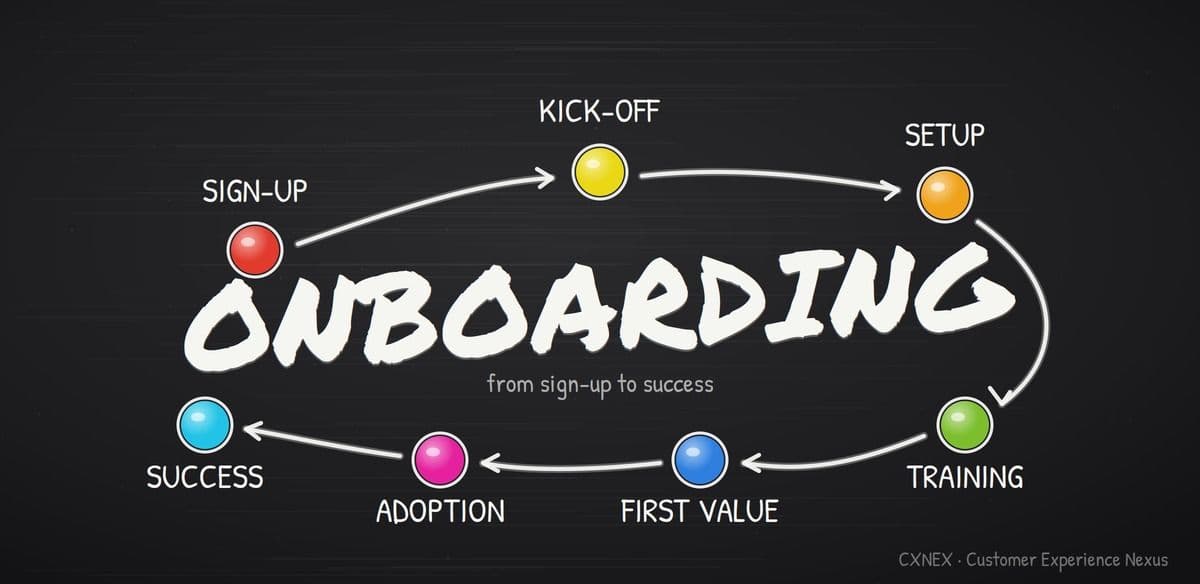
You've scheduled the onboarding call, and the invite list tells you exactly how hard this is going to be. There's the end user who'll actually touch the product every day. The developer who has to wire it into their stack. The manager who owns the team's outcomes. And the CXO who signed off on the budget and wants to know it wasn't a mistake. Some are technical, some aren't. And you have one hour to make all of them feel like the call was for them.
This is the moment onboarding lives or dies. Get it right and every person in the room leaves with a reason to lean in. Get it wrong and you've spoken past everyone at once - too shallow for the developer, too deep for the CXO, too abstract for the user, too much for the manager. And in an AI-native product, the stakes are higher than usual, because each of these people carries a different fear about AI, and if you don't address theirs, they'll quietly become the reason adoption stalls.
Here's how to read the room and speak to all of it.
The core model: seniority changes the question, background changes the vocabulary
Before you tailor anything, internalize one distinction. Two variables are moving independently in that room.
Seniority determines the question someone is asking. A user asks "will this make my day better or worse?" A CXO asks "will this move a number I report on?" These aren't the same question at different depths - they're genuinely different questions, and seniority is what predicts which one someone holds.
Technical background determines the vocabulary you use to answer it, not the answer itself. A non-technical developer-equivalent and a technical one both want to know "can I trust and control this thing" - you just reach one with "here's the API and the eval harness" and the other with "here's how you'll verify it's doing the right thing." Never confuse a non-technical person with an unintelligent one. They have the same concern; they need it in their language.
So your prep isn't four scripts. It's four questions to answer, each of which you can phrase technically or plainly depending on who's asking. Hold that grid in your head and the call gets much easier.
The audiences - what they're really asking
01. The actual user
What they're really asking:
"Is this going to make my job easier, or is it one more thing I have to babysit?"
Users don't care about your architecture or your ROI model. They care about their Tuesday. Show them the product doing their actual task - not a generic demo, their workflow - and show it end to end, including the messy parts. The fastest way to lose a user is a demo that only works on clean inputs, because they know their inputs aren't clean.
The AI-native fear to preempt:
"Is this going to replace me, or make me look bad when it's wrong?" Address it directly and early. Frame the product as removing the tedious part of their job so they can do the part they're actually good at. And be honest that it will sometimes be wrong - then show how easy it is to catch and correct, so being wrong isn't scary. A user who believes the AI makes them faster and keeps them in control becomes your champion. A user who fears it becomes your quietest, most effective blocker.
02. The developer (technical background)
What they're really asking:
"How do I integrate this, control it, and trust its behavior in production?"
Developers evaluate you on substance, fast. Give them specifics: how integration works, what the API looks like, how data flows and where it's stored, latency, rate limits. Respect their time and their skepticism - hand-waving here costs you credibility with the one person who can veto the whole thing on technical grounds.
The AI-native fear to preempt:
"This is probabilistic - how do I keep it from doing something unpredictable in my system?" This is the concern unique to AI-native products, and developers feel it most acutely. Show them the controls: how you constrain outputs, how confidence is surfaced, how failures are handled, how they can test and evaluate behavior, and what your stance is on their data and model training. Developers don't need the AI to be perfect. They need to know its failure modes are bounded and observable. Give them that and they'll defend the product internally.
03. The manager
What they're really asking:
"Will my team actually adopt this, and how does it change how we work and what I'm accountable for?"
Managers live between the users and the executives, and they carry the risk of both. They want to know the workflow impact, the rollout plan, what could break, and how they'll know it's working. Speak in terms of their team's outcomes and their reporting. Give them a concrete adoption plan and the one or two metrics they can watch to prove value upward.
The AI-native fear to preempt:
"What happens when it gets something wrong and it's my name on the outcome?" Managers are accountable for results they now partly delegate to a model, and that's uncomfortable. Reassure them with the human-in-the-loop design, the ability to review and override, and a clear picture of where the product is strong today versus where a person should still check. Managers want confidence they can defend the decision to use this - give them the talking points to do it.
04. The CXO
What they're really asking:
"Does this move a number I care about, and what's the risk if it goes wrong?"
Executives have the least time and the widest lens. Don't demo features to them - connect the product to the outcome they're accountable for: revenue, cost, speed, risk. Two sentences on strategic fit beat twenty minutes of clicks. And name the risk before they do; security, compliance, and data handling are usually top of mind, and volunteering them builds far more trust than being asked.
The AI-native fear to preempt:
"Is this a headline risk - data leakage, a compliance violation, a public AI failure?" This is what keeps a CXO up at night about AI specifically. Address governance, data privacy, and reliability head-on, at the altitude they think in. And be the honest vendor: every executive evaluating AI in 2026 has been burned by one that overpromised, so when you say "here's exactly where it's strong and where it isn't yet," you differentiate on the one axis your competitors can't fake - credibility.
How to actually run the mixed-room call
Knowing the four audiences is half of it. The other half is sequencing so you serve all of them without losing anyone.
Open with the "why" everyone shares:
Start with the outcome the whole room can agree on - the problem this solves and the value it creates. This is the CXO's language and it orients everyone else, buying you goodwill before you go deeper.
Layer from outcome to detail, not the reverse:
Go value → workflow → technical. This lets executives and non-technical folks get what they need up front and lean out gracefully as you go deeper, while developers get the depth they came for later in the call. Front-loading the API spec loses the room; front-loading the outcome keeps it.
Signpost every transition:
Say out loud who the next segment is for: "This next part is mostly for the technical folks - everyone else, feel free to just listen or drop." Naming the audience respects everyone's time and gives senior people explicit permission to leave without feeling they missed something. Nobody resents a call that told them when they could stop paying attention.
Read the room and reallocate live:
If the CXO drops after ten minutes, that's fine - it usually means they got what they needed. If the developer is quiet, pull them in with a direct technical question; unaddressed developer skepticism is the most common silent killer of adoption. Adjust your time budget to who's actually engaged.
Address the AI fears without being asked:
Weave in reliability, control, human oversight, and data handling proactively. If you wait for someone to raise the "but can we trust it?" question, you've let doubt sit in the room unanswered. Naming it first signals confidence and honesty.
Close with a next step per audience:
End by giving each person one concrete action: the user gets their first real task to try, the developer gets sandbox access and docs, the manager gets the rollout plan and the metric to watch, the CXO gets the one number this will move and when. A call that ends with "we'll follow up" ends with nothing. A call that ends with four owned next steps ends with momentum.
The bottom line
A mixed-seniority onboarding call feels like an impossible balancing act, but it isn't - it's four clear questions and one honest sequence. Remember that seniority sets the question and background sets only the vocabulary. Serve the shared outcome first, then layer down to detail while signposting who each part is for. And because you're onboarding an AI-native product, remember that everyone in that room carries a specific fear about trusting AI - and the single most powerful thing you can do is name each fear before they have to.
Do that, and the call stops being a compromise where everyone gets a little. It becomes the moment where the user sees an easier day, the developer sees a system they can control, the manager sees a team that will adopt it, and the CXO sees a number that will move. That's not four separate wins. That's how adoption actually starts.